

For most of her career, Trudy Timmer helped other people think about aging. As a clinical social worker who spent part of her career working with senior housing, she understood the importance of planning ahead. She had known about Friendship Village of Bloomington in Minnesota for nearly 40 years and always heard positive things about the community.
Still, when it came time to make those decisions for herself, Trudy experienced many of the same questions other older adults face. After retiring, she moved into a co-op she loved and lived there for four and a half years. Then a health scare shifted her perspective, and she began thinking about what could happen if her health suddenly changed.
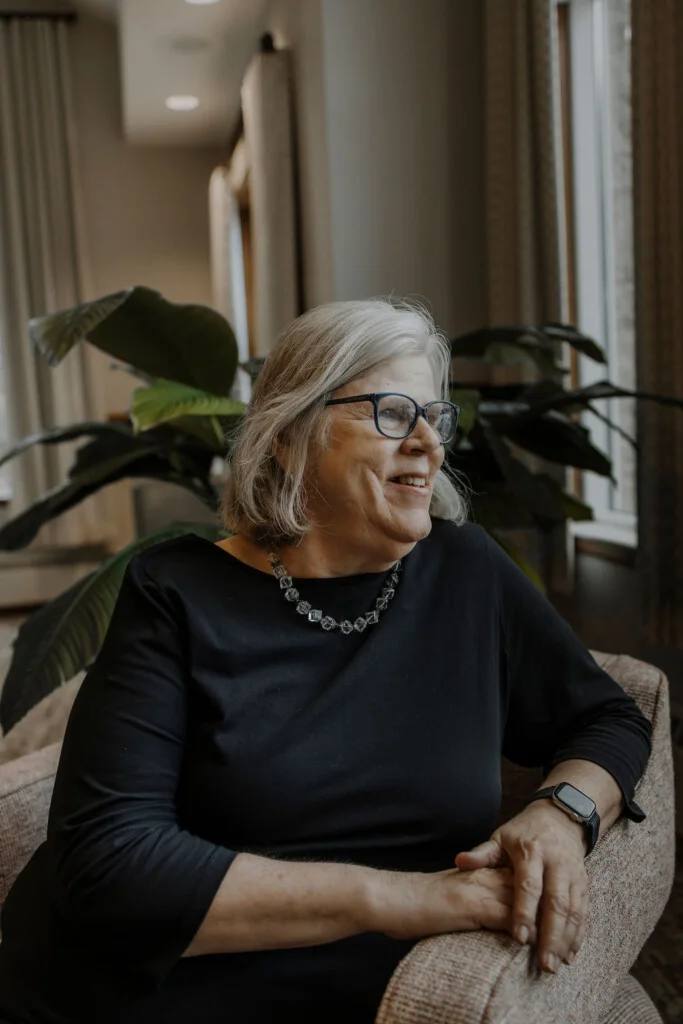
“I thought, I need to plan further because I have no family in the state,” Trudy recalls. Her years as a social worker had shown her how quickly a hospital stay could leave someone searching for whatever care option happened to have an opening, and Trudy wanted to be able to make those choices for herself.
She began attending programs at Friendship Village and exploring the community more seriously, although one question remained: “I thought, ‘I don’t know if I’m going to be able to afford it,’” said Trudy.
It is a concern Ashlee Mueller, senior living expert and sales director at Friendship Village, hears often. Many of the older adults she meets have spent decades saving, investing and building equity in their homes, so when it comes time to look at the entrance fee that comes with a Type A Life Care community like Friendship Village, it can initially feel very different from the familiar monthly rent associated with other senior living options.

However, understanding what that investment of the upfront entrance fee provides can change the conversation and, ultimately, bring a greater peace of mind and independence that many people don’t realize is possible as you age.
As a Type A Life Care community, Friendship Village combines independent living with priority access to higher levels of care should a resident’s health needs change. As a resident at Friendship Village, you make an upfront investment that provides greater predictability in future monthly costs, along with access to a wide range of services, amenities and opportunities to connect with others.
Ashlee describes proactive planning as an opportunity to maintain greater control over the future. “By being proactive, you are really choosing to take more control of your life and your future,” she says. “You get to choose where you go.”
That choice becomes particularly important when future care enters the financial picture.
In a financial-planning presentation at Friendship Village, professionals from Boulay Wealth describe long-term care as one of the “big unknowns” in a retirement plan. They encourage older adults to consider how changing health needs could affect even a carefully constructed financial plan and to explore those possibilities before care is needed.
One common misconception involves Medicare. Boulay explains that while Medicare provides broad health coverage for people 65 and older, it does not pay for traditional assisted-living expenses. Medicare may cover short-term skilled nursing care under certain circumstances, but understanding these distinctions makes planning for potential long-term care expenses an important part of the larger retirement conversation.
The encouraging part is that prospective residents may have more resources available to them than they initially realize.
Boulay encourages families to look across their entire financial picture when considering how they might fund future care. Their “Big 5” includes cash and brokerage assets, life insurance cash value, home equity, Roth IRAs or Health Savings Accounts, and IRA distributions. Each comes with different financial and tax considerations, making a conversation with a financial and tax professional an important step in determining what makes sense for an individual household.

For someone who has spent decades building equity in a home, for example, that home can become part of the strategy for funding the next chapter of life rather than simply a place to remain indefinitely.
Life Care can also introduce tax considerations that may change how someone evaluates its overall cost. Boulay’s presentation explains that a portion of qualifying Life Care entrance and monthly fees may be treated as medical expenses for tax purposes, depending on individual circumstances and applicable tax rules. Their financial planners encourage people to consider those potential deductions alongside the timing and source of distributions from retirement accounts.
For Trudy, looking at her own resources helped make Friendship Village feel attainable. Social Security, her pension and savings all became pieces of a larger plan. Just as importantly, she considered what she was gaining through that investment: future care, greater financial predictability and a community she could enjoy immediately.
Since moving to Friendship Village in December 2025, Trudy has joined the choir, participated in water aerobics and exercise classes, and begun working toward a personalized fitness plan. Her background in social work taught her how important community and engagement can be to quality of life as people age.

“We need community to remain active and keep going and have a quality of life,” she says.
Planning ahead has also given Trudy something less tangible: freedom. Her nephew serves as her executor and is raising four children of his own. By making decisions about her housing and future care herself, Trudy feels she has simplified what he may someday need to manage on her behalf.
“It is very freeing,” she says. “I feel like this will be less of a burden for my family.”
That peace of mind may be one of the most valuable parts of proactive planning. Rather than waiting for circumstances to determine the next step, older adults have an opportunity to understand their resources, explore communities, ask questions and choose the future that feels right for them while they are healthy and independent.
For Trudy, the investment ultimately became about far more than securing a place to live.
“It’s a quality of life,” she says. “With the wellness program, the socialization aspects, the trips, the food plan … it’s just such a freedom.”
At Friendship Village, that freedom is at the heart of planning ahead: understanding the resources you have built over a lifetime, making thoughtful choices about how you want to use them and creating more space to enjoy the life you are living today. Wondering whether Life Care could fit into your financial plan? The Friendship Village team can help you understand your options and the questions to explore with your financial advisor. Learn more at friendshipvillagemn.com and schedule a personal conversation or tour of the community to learn more.
Friendship Village of Bloomington and Lifespace Communities, Inc. do not provide tax, financial, or legal advice. The information in this article is for general informational purposes only. Please consult your own tax, financial, or legal advisors before making decisions based on this content.
